
Infrastructure that supports the operation
Fully managed servers for the systems your business depends on
Your infrastructure should support the operation, not become another system your team has to watch. CLOUD-EX can take responsibility for an agreed environment: architecture, provider selection, provisioning, deployment, secure access, monitoring, patching, backups, troubleshooting, documentation, and continuing improvement.
That environment may be a single VPS, a portfolio of websites, a complex application backend, databases and message queues, a Windows remote-work platform, or the wider technology estate of a growing company. We work with both Linux and Windows Server and can manage a new build, a careful migration, or an existing environment that needs clearer ownership.
Every engagement begins by making the operating model explicit: what runs where, who can access it, how changes are made, what is monitored, how data is protected, and what should happen when something goes wrong.
From one business-critical server to a connected cloud environment, we can design it, secure it, move it, and manage its day-to-day operation within a clearly agreed scope.
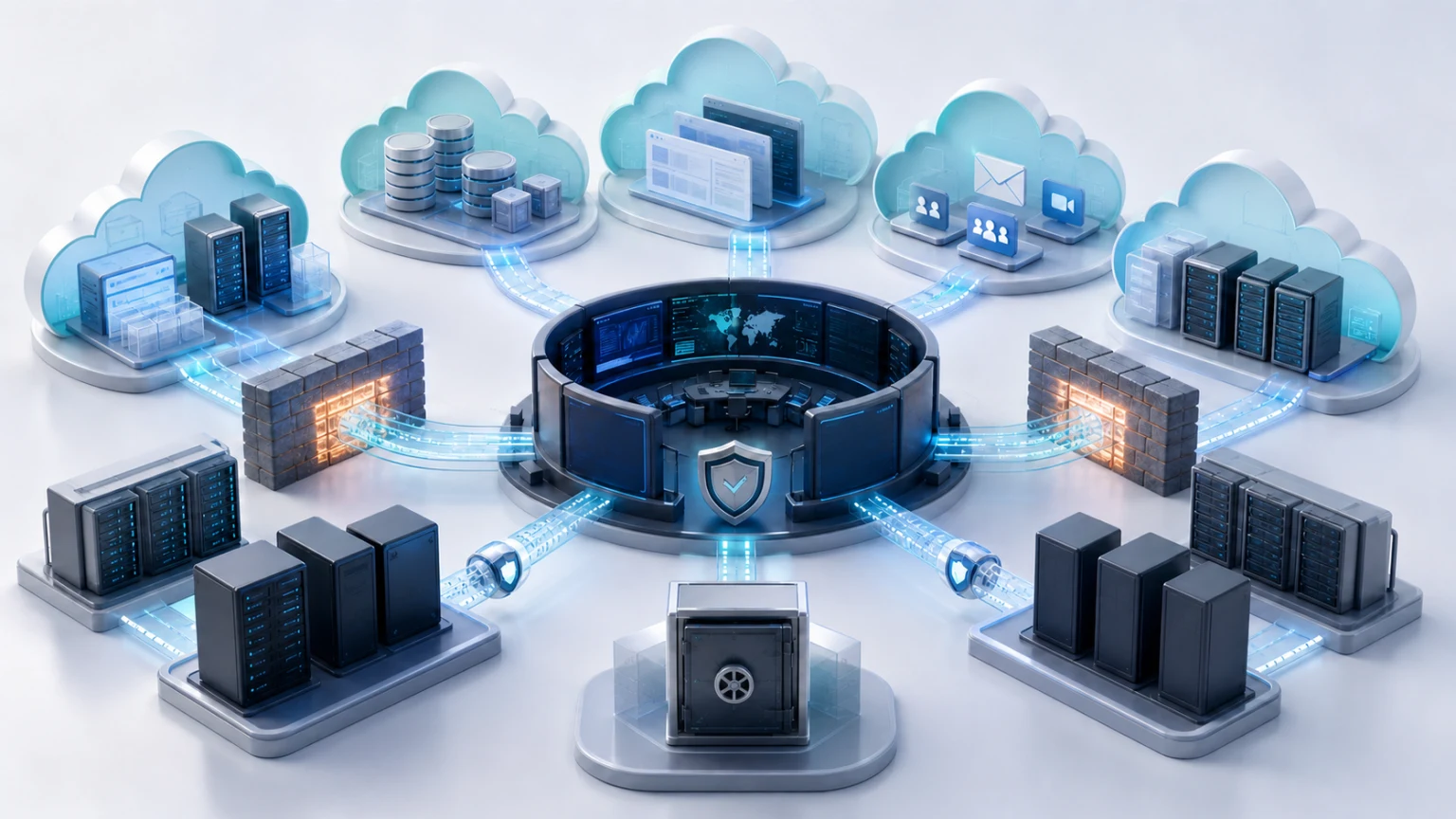
Workloads we can operate
More than website hosting
A dependable environment is the combination of compute, networking, data, access, deployment, protection, and operational care. We can manage the full set of components required by the workload rather than treating the server as an isolated rented machine.
Website portfolios and multi-site hosting
Corporate sites, WordPress and WooCommerce installations, client portals, certificates, DNS, deployment workflows, isolation between sites, and the supporting databases and storage.
Web applications, APIs, and backends
Production environments for custom PHP, Laravel, .NET, Node.js, and other supported systems, including application services, storage, caching, background workers, and deployment automation.
Databases and protected data services
SQL Server, MySQL, PostgreSQL, and supported data services with restricted access, appropriate maintenance, monitoring, database-aware backups, and recovery planning.
Queues, workers, and integrations
RabbitMQ and similar messaging, scheduled processing, integration services, long-running workers, notifications, and the operational dependencies that keep asynchronous systems moving.
Business platforms and collaboration
CRM, task management, document collaboration, internal portals, shared services, and other business applications that need controlled access and dependable availability.
Windows remote-work environments
Managed Windows workspaces with individual users, role-based privileges, approved Microsoft and business applications, shared resources, secure remote access, updates, and backups.
From assessment to everyday operation
A managed lifecycle, not a one-time installation
Provisioning is only the beginning. The environment has to be understood, secured, observed, maintained, and recoverable throughout its useful life.
- Assess the current operationWe inventory workloads, users, providers, dependencies, data, access paths, known issues, deadlines, and the business impact of interruption.
- Select the architecture and platformCapacity, location, managed services, cost, recovery needs, vendor support, and future change guide the design and provider choice.
- Provision, configure, and hardenNetworks, operating systems, accounts, firewalls, VPN access, certificates, application dependencies, logging, and backup policies are prepared deliberately.
- Migrate, deploy, and validateData and services move through a controlled plan with checks for application behaviour, access, performance, public routing, scheduled work, and recovery.
- Operate and supportAgreed monitoring, patching, backup review, troubleshooting, incidents, routine changes, documentation, and supplier coordination become continuing responsibilities.
- Review and improveCapacity, cost, security posture, ageing components, recurring problems, and changing business requirements are reviewed so the environment can evolve.
Security from the network inward
Expose the service—not the administration
A public website or API needs a public route. Its server management ports, database services, remote desktop, consoles, and administrative tools usually do not. We can leave only the application traffic that is required publicly reachable while restricting privileged access to a VPN, private network, approved addresses, or another tightly controlled path.
The appropriate combination of security controls depends on the workload, provider, user access, and operational risk. We document the selected controls and the responsibilities around them.
Security is an ongoing operating discipline, not a one-time assurance. Responsibilities, monitoring coverage, backup policy, response arrangements, and recovery objectives are documented for the agreed service scope.
Layered firewalls
Where available, provider or network-layer rules work with the host firewall so traffic is controlled before and at the server.
Private administration
RDP, SSH, database administration, and control panels can be restricted behind VPN or approved paths.
Identity and least privilege
Named accounts, role-based access, MFA where supported, and prompt onboarding or removal reduce shared and excessive access.
Hardening and patching
Supported systems, reduced services, security updates, TLS, careful secrets handling, and documented exceptions form the operating baseline.
Monitoring and logs
Health, capacity, certificate expiry, backup outcomes, and important events can be observed and escalated according to the agreement.
Recovery that is checked
Retention, separate copies, database consistency, job monitoring, restore tests, and a recovery runbook matter as much as a completed backup job.
Platform choice without lock-in thinking
Use the platform that fits—not the largest name by default
CLOUD-EX works across Microsoft Azure, Amazon Web Services (AWS), Google Cloud, DigitalOcean, Hetzner, and Contabo. We also manage Linux or Windows VPS and dedicated-server environments where that is the better operational choice.
The right provider depends on more than monthly price. We consider workload shape, region and data location, managed-service needs, Windows and Microsoft integration, expected growth, network design, backup and recovery options, support, performance, and total operating cost. Hetzner and Contabo can provide cost-conscious options; hyperscale platforms can be valuable when the architecture benefits from their broader services.
Microsoft Azure
Cloud, Windows, identity, remote desktop, and hybrid Microsoft environments.
AWS
Flexible compute, networking, storage, messaging, data, and integrated cloud services.
Google Cloud
Cloud application, data, container, networking, and managed-service options.
DigitalOcean
A focused developer cloud for suitable websites, applications, and data services.
Hetzner
Cost-conscious European cloud and dedicated infrastructure for appropriate workloads.
Contabo
Value-oriented VPS and dedicated resources where design and active management remain important.
Where practical, the provider account and subscriptions remain in the client’s name, with named delegated access for CLOUD-EX. Billing ownership, credentials, documentation, and handover responsibilities are agreed from the start.
Secure remote work
A controlled Windows workspace for every authorised user
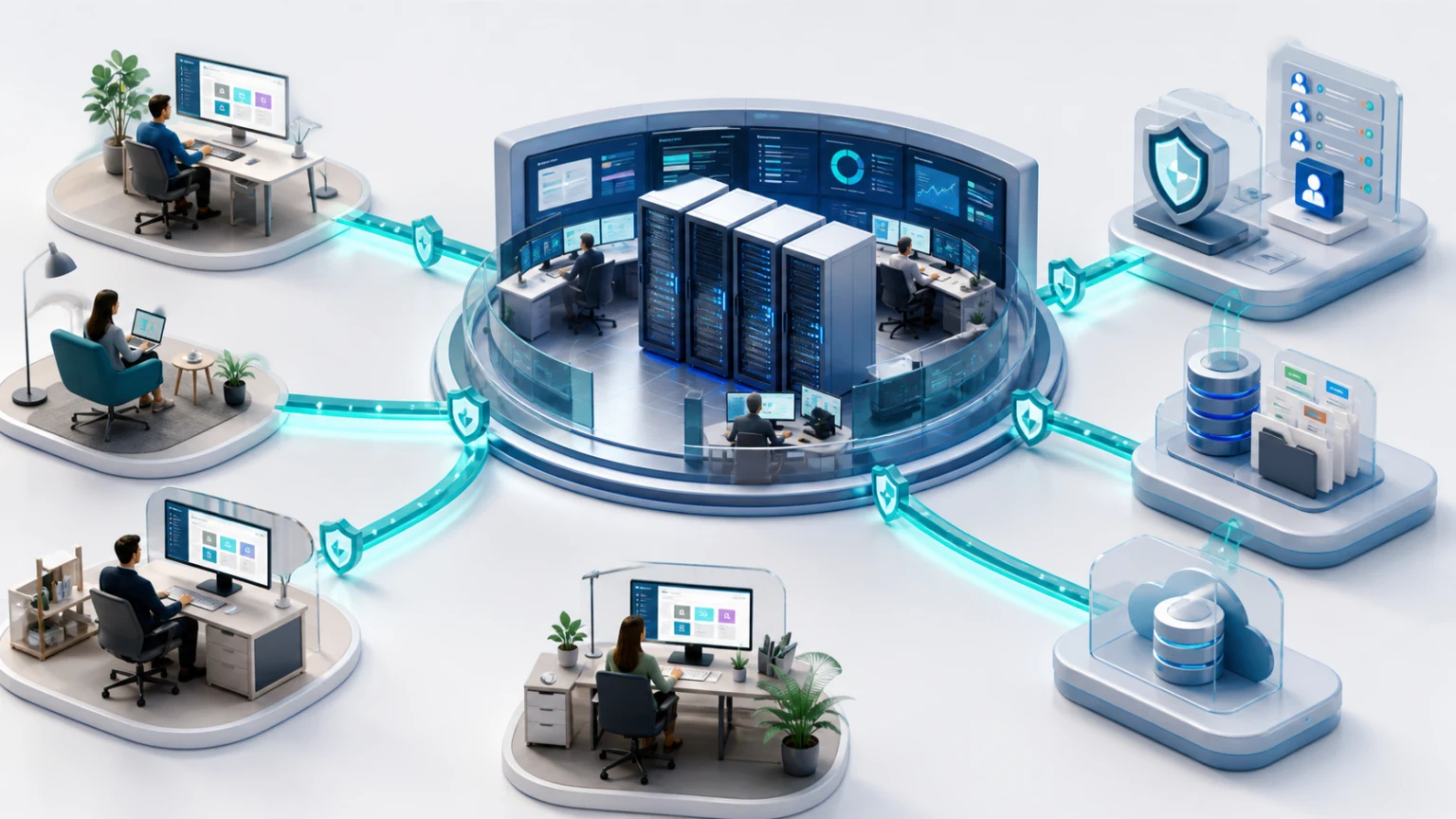
We design and manage Windows-based remote environments for teams that need a consistent business desktop from the office, home, or another authorised location. The deployment may use Windows Server Remote Desktop Services or Azure Virtual Desktop, depending on requirements, licensing, and the desired operating model.
Each employee receives an individual account, the applications and shared resources required by their role, and no more privilege than necessary. Self-hosted RDP can be kept off the open internet behind VPN access; identity, session, and network controls are selected for the chosen platform.
Applications and productivityMicrosoft 365 Apps and approved line-of-business software for appropriately licensed users, plus shared folders, printers, and collaboration resources where required.
Users and privilegesNamed accounts, security groups, role-based permissions, onboarding, access changes, and prompt offboarding when a person leaves.
Secure connectivityVPN-gated access for self-hosted environments, platform-appropriate controls, MFA where supported, and restrictions around administrative functions.
Policies and maintenanceOperating-system and application updates, session policies, storage controls, monitoring, and practical support for the agreed environment.
Backup and recoveryDaily or more frequent protection according to the data and risk, with agreed retention, separate copies, monitoring, and restore checks.
Licensing made explicitWindows Server, RDS access, Microsoft 365, and other application licences are selected and quoted according to the users and deployment; they are not assumed to be automatically included.
External IT management
From the server to the wider digital workplace
Infrastructure rarely stops at the operating system. Company domains, email, identities, websites, certificates, business applications, suppliers, renewals, and support responsibilities all meet in daily operations. CLOUD-EX can act as your external IT manager, work alongside an internal team, or take ownership of a defined operational area.
Identity, domains, and communication
- Company domains, DNS, and certificate management
- Microsoft 365 or other business email setup
- Users, groups, shared mailboxes, and permissions
- SPF, DKIM, DMARC, and email-delivery configuration
- Onboarding, role changes, and offboarding
Applications and hosting
- Multiple websites and web applications
- CRM, task management, and collaboration platforms
- Databases, queues, file services, and integrations
- Deployments, certificates, scheduled work, and storage
- Access between cloud and office or on-site systems
Operational ownership
- Incidents, routine changes, and supplier coordination
- Renewals, capacity, cost, and lifecycle reviews
- Access records and operating documentation
- Backup policy and recovery preparation
- Office networks, workstation access and update policies, endpoint protection, and shared printers where required
- Coordination with internet, telecom, and hardware suppliers
- A clear route for technology questions and decisions
Backup and continuity
Design recovery before you need it
A daily backup may be appropriate for some remote-work files and small websites. A transactional application may need much more frequent protection. We agree the policy around the business impact rather than applying the same schedule to every system.
How much data?
Define how much recent work or transaction history the organisation could tolerate losing. This informs backup frequency and replication.
How much time?
Define how quickly the service needs to return. This shapes architecture, spare capacity, automation, and the recovery runbook.
Can it be restored?
Monitor backup jobs, retain separate copies, and test representative restores. A successful job alone does not prove recoverability.
Where appropriate, protection includes encrypted transfer and storage, off-server or off-site copies, database-consistent backups, defined retention, restoration checks, and documented responsibilities.
Ways to engage
Start with the responsibility you need covered
Infrastructure review and hardening
Understand the current environment, urgent exposure, ownership gaps, backup position, and a practical improvement sequence.
New environment or migration
Design and establish a new platform, or move workloads with dependencies, access, data, deployment, validation, and continuity considered.
Fully managed ongoing operations
CLOUD-EX takes ownership of the clearly agreed monitoring, maintenance, backup, support, change, and improvement responsibilities.
Co-managed infrastructure or external IT
Work with your internal team, developer, or suppliers while taking responsibility for a defined platform or wider operational remit.
Relevant architecture example
Cloud messaging and on-site Windows software working as one
The Melody Mixer Remote solution uses RabbitMQ hosted on AWS to carry actions from a mobile application to Windows software operating inside a hotel. It is a practical example of the kind of cloud, messaging, network, and on-site integration that infrastructure must support as one connected operating environment.
Frequently asked questions
Questions about managed infrastructure
Can you take over an existing server or cloud account?
Yes. We begin with access, ownership, workload, dependency, backup, billing, and risk checks. Urgent exposure can be addressed first, followed by a documented handover and improvement plan. A takeover does not have to mean an immediate migration.
Can a public website still have VPN-only administration?
Yes. The website’s required public ports remain reachable, while RDP, SSH, database management, and other privileged services can be restricted to VPN or another approved private path where the architecture supports it.
Do you manage both Linux and Windows Server?
Yes. We work with Linux environments for web and application workloads and Windows Server for .NET, SQL Server, Remote Desktop Services, file services, and other suitable business systems.
What does fully managed include?
It means CLOUD-EX takes ownership of responsibilities defined in the proposal or service agreement. These may include monitoring, patching, backups, access, troubleshooting, routine changes, documentation, provider coordination, and improvement work. Coverage, hours, response arrangements, exclusions, and client responsibilities are agreed explicitly.
How are backups and recovery arranged?
The schedule, retention, destinations, encryption, database consistency, monitoring, and restore checks follow the workload and agreed recovery objectives. Daily backup is common for some systems, but important transactional services may require more frequent protection.
Can you manage domains, email, and Microsoft 365 as well?
Yes. The agreed scope can include domains, DNS, certificates, mail configuration, Microsoft 365 administration, users, groups, shared mailboxes, email-authentication records, and coordination with other suppliers.
Are Windows, RDS, and Microsoft 365 licences included?
Licensing depends on the platform, applications, and number and type of users. Microsoft 365 Apps on a shared Remote Desktop Services host require an eligible Microsoft 365 plan and Shared Computer Activation. Windows Server RDS also requires the appropriate per-user or per-device RDS CALs; Azure Virtual Desktop entitlement depends on the host operating system and Microsoft licence. These requirements are confirmed and quoted rather than assumed.
Do you provide 24/7 support or a guaranteed response time?
Support coverage is agreed to match the system. The proposal defines monitoring windows, severity levels, response targets, escalation routes, and any required out-of-hours arrangements; undefined 24/7 coverage is not assumed.
Make ownership clear
Tell us what must keep running
Share the current provider, workloads, users, locations, backup concerns, security questions, and any important deadline. We can begin with an infrastructure review, a migration plan, or a clearly defined managed-service scope.